
Environment, sports and recreation
Lake Wdzydze and surroundings
The complex of houses and apartments “Dworek Wdzydze” is located in the Wdzydze Landscape Park which also includes Lake Wdzydze and several smaller lakes surrounded by forests. There are numerous natural monuments in the park area, including trees and rocks with unusual shapes. The forest and lake area of the park is distinguished by its extraordinary landscape beauty. The vegetation there is diverse and well-preserved, and the aquatic and peat bog vegetation is fully developed.
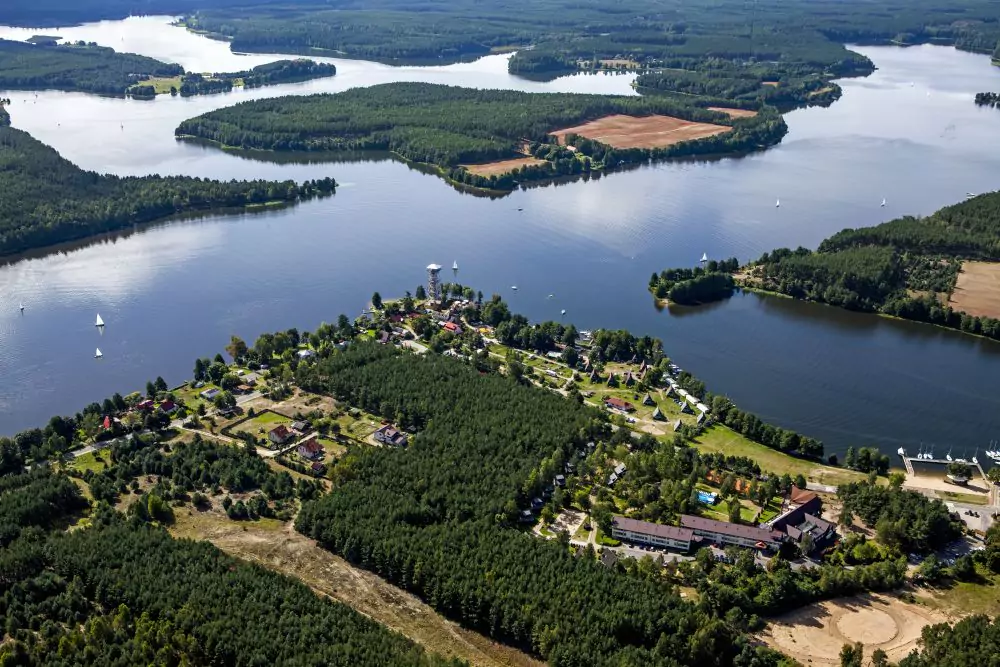
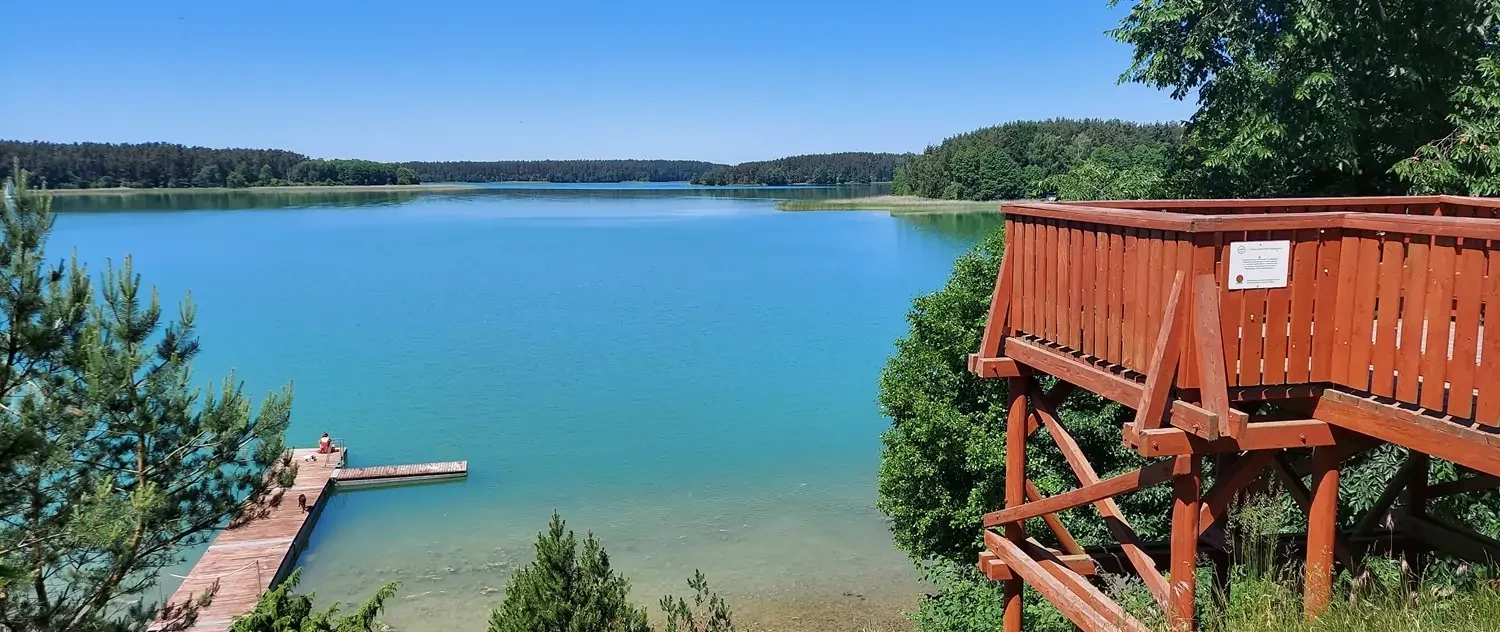
The intimate location of the “Dworek Wdzydze” complex with a unique atmosphere, near pine forests, is 200 m in a straight line from Lake Wdzydze. There is an unguarded bathing area with a shelter and benches. The beach is grassy, and the shore itself is sandy, gently sloping into the lake, also known as the Kashubian Sea or Wielka Woda.
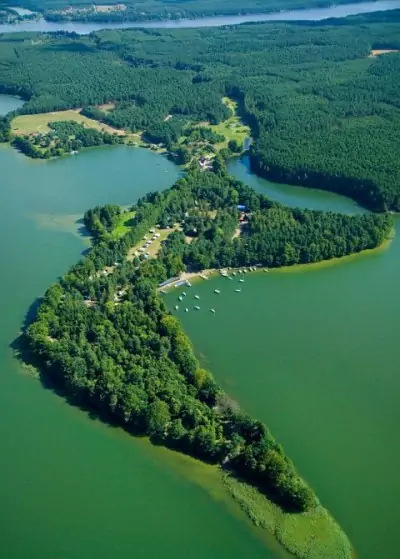
The extent of Lake Wdzydze consists of the connection of five lakes: Wdzydze, Jelenie, Radolne, Gołuń and Słupinko. The depth of the lake, resembling a cross on the map, is up to 70 meters, and its total area is 1,455.6 hectares, which means that it is the largest pool in the Kashubian Lake District. The Kashubian Sea is completely covered by the Wdzydze Landscape Park and although there is no permanent connection with the Baltic Sea trout live there.
Lake Wdzydze with a shoreline extremely rich in bays and promontories, having its own local names, and with an unusual cross shape is one of the most beautiful lakes in Kashubia. Each of these lakes has a different character. Gołuń is an open lake with field shores interspersed with small forests. Radolne, on the other hand is wide, circular and secluded, with the mouth of the Wda River hidden in the reeds which leads to the mysterious forest lake Słupinko. Jelenia is a winding, narrow lake with a beautiful forest on a steep shore.
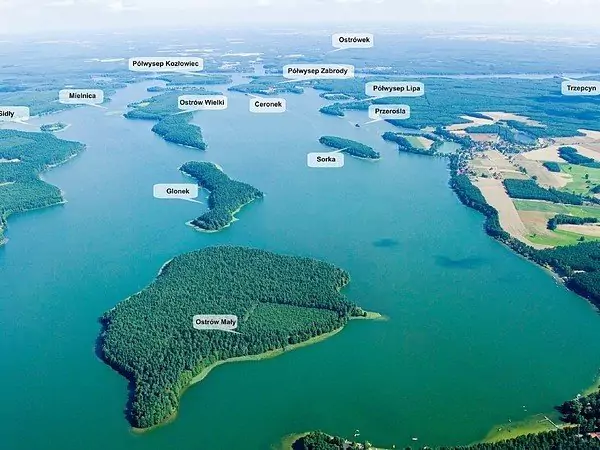
Wielka Woda is huge, widely spread, with very diverse shores and full of numerous natural islands, which constitute the natural, landscape and tourist wealth of the park. The diversity of these islands in terms of size, shore height, vegetation and animals inhabiting them makes them a unique natural treasure. Each of them is a separate gem with a different character. Together they create a complex green pattern against the blue lake background, visible from a bird’s eye view.
The largest island located in Lake Wdzydze is the island of Ostrów Wielki. It is the second largest lake island in Poland. It has an area of 90.66 ha and is approximately 3 km long. The maximum width is approximately 0.5 km. The northern coastal part of the island was inhabited until recently, while the southern part is covered with a pine forest. The island is one of the stages of the Wda River water route.
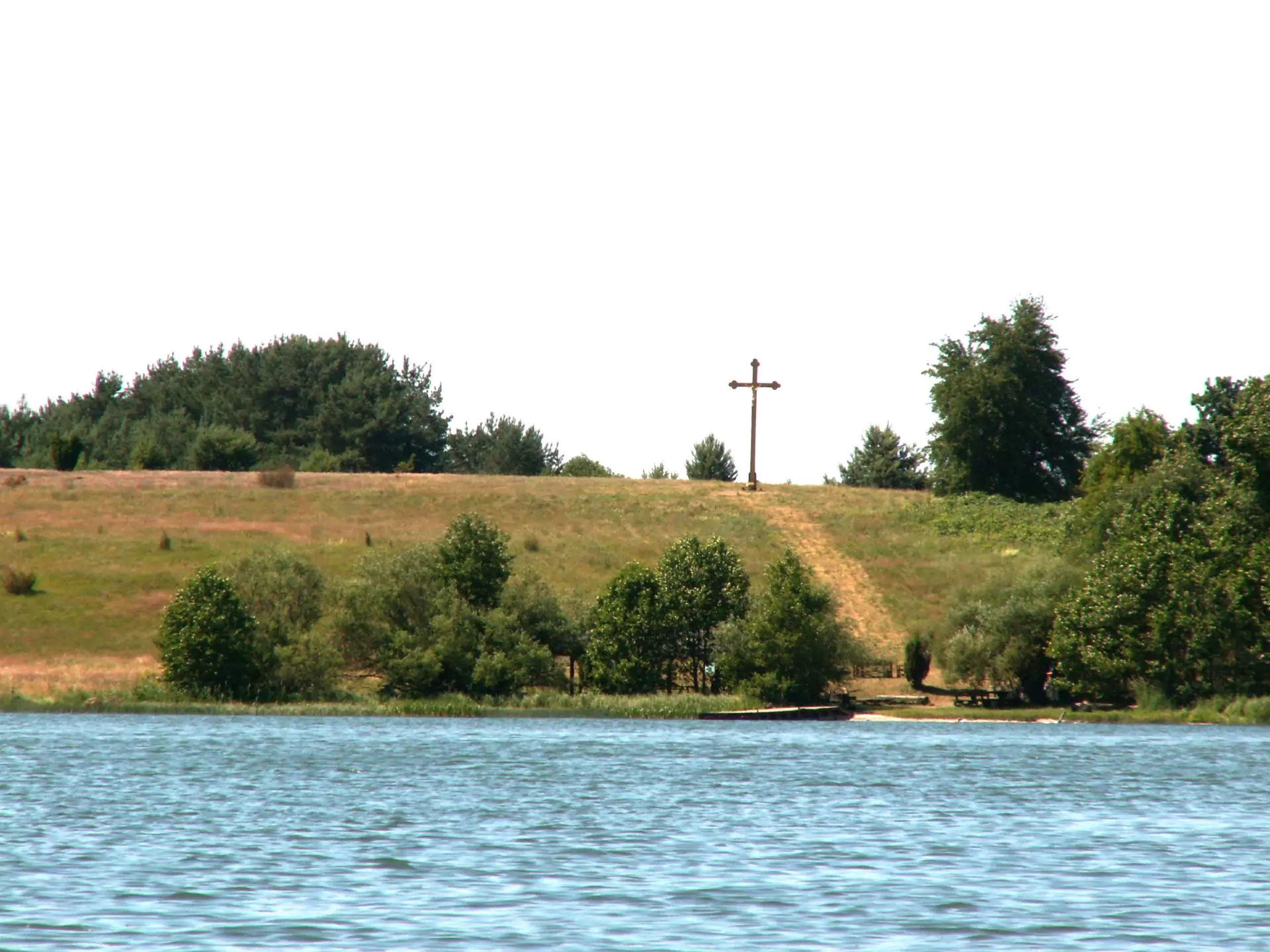
The second largest island is Ostrów Mały. Its area is just over 26 ha, its width is approximately 0.7 km, and its length is approximately 1.3 km. The island is entirely covered with pine forest, which is a refuge for rare species of birds and plants. Here we will find oak-hornbeam habitats and strongly developed rushes where nesting and roaming ducklings and grebes seek shelter.
Glonek Island, located south of Ostrów Wielki, is a planned nature reserve. The unique advantages of this place, with an area of 9.81 ha, include not only nesting species of water birds, but also special plant habitats, rarely found in the Wdzydze Landscape Park. On the island we can find oak-hornbeam and riparian plant communities, as well as a number of other rare plants, such as thermophilic ones, associated with rockfalls on the island’s shores.
To the west of Ostrów Wielki there is Sidły Island, with an area of less than 4 hectares, mainly covered by a wet meadow surrounded by reeds and rushes. The layout of the island creates ideal conditions for both wetland plants and wetland birds. The aim of the protection of Sidły Island is to preserve a wet meadow with a site of common lacewings and Listera ovata, which are under strict protection, as well as other rare and protected plant species occurring there. Currently, the procedure for establishing the Wyspa Sidły ecological site is underway.
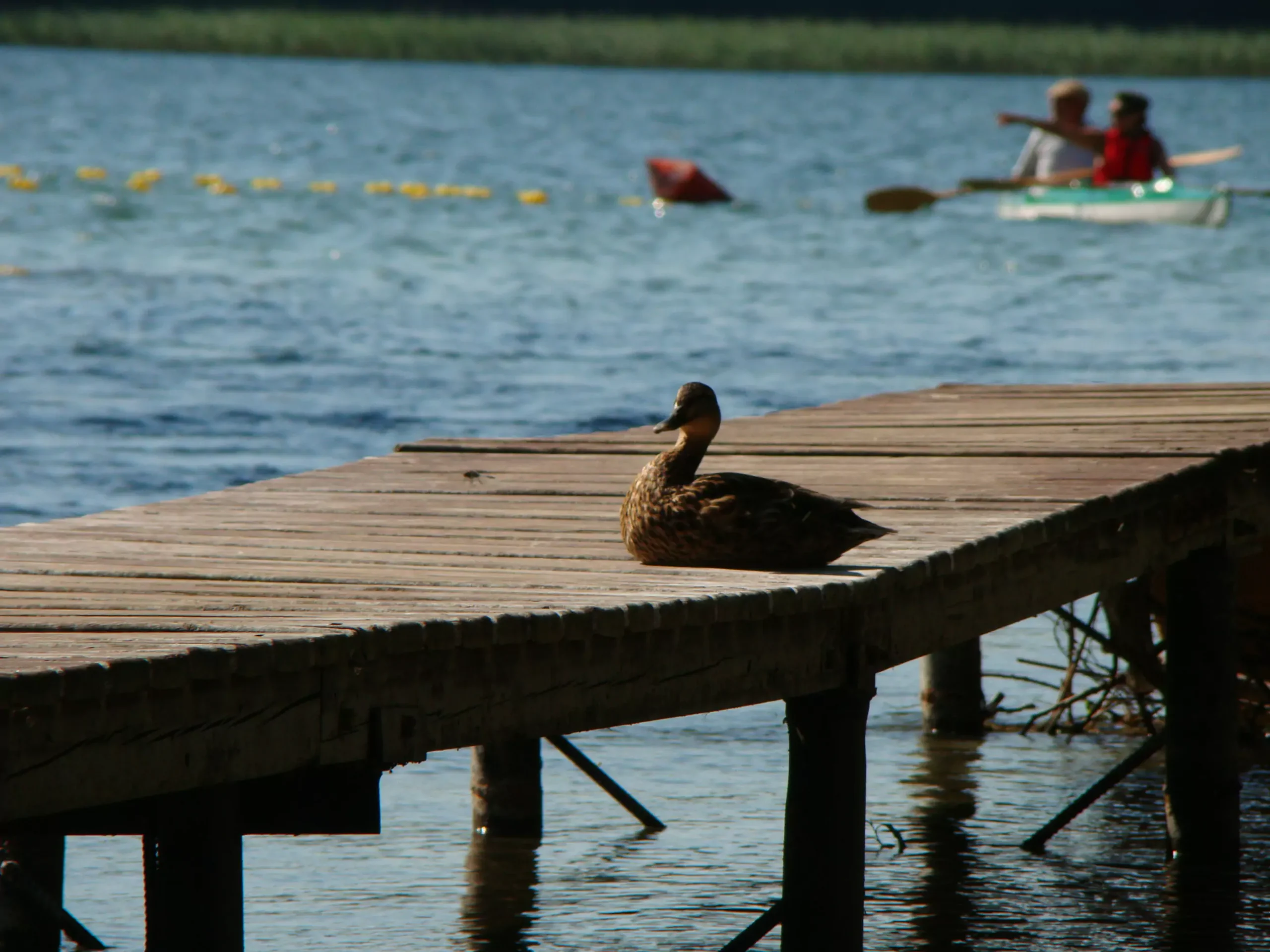
The island located east of Ostrów Wielki is Ceronek. It is a small area of only 0.16 ha. The vegetation of this island consists of several trees surrounded by a reed bed, which is a breeding ground for the sandpiper and greylag geese, as well as a nesting place for the reed warbler.
Among the remaining islands of Lake Wdzydze is the island of Sorka with an area of 4.9 ha, which is covered with mixed forest and is private property. Another flat and elongated one is Przerośla (0.23 ha). On Lake Gołuń there is the island of Trzepcyn (0.6 ha) covered mainly with pine trees, and on Jelena there is the island of Ostrówek (0.17 ha) covered with deciduous trees. There is a belt of reed beds around all these islands. All these islands are of great importance as habitats and breeding areas for rare and protected wetland birds. You should remain silent on the islands and their surroundings and do not scare, catch or kill animals.
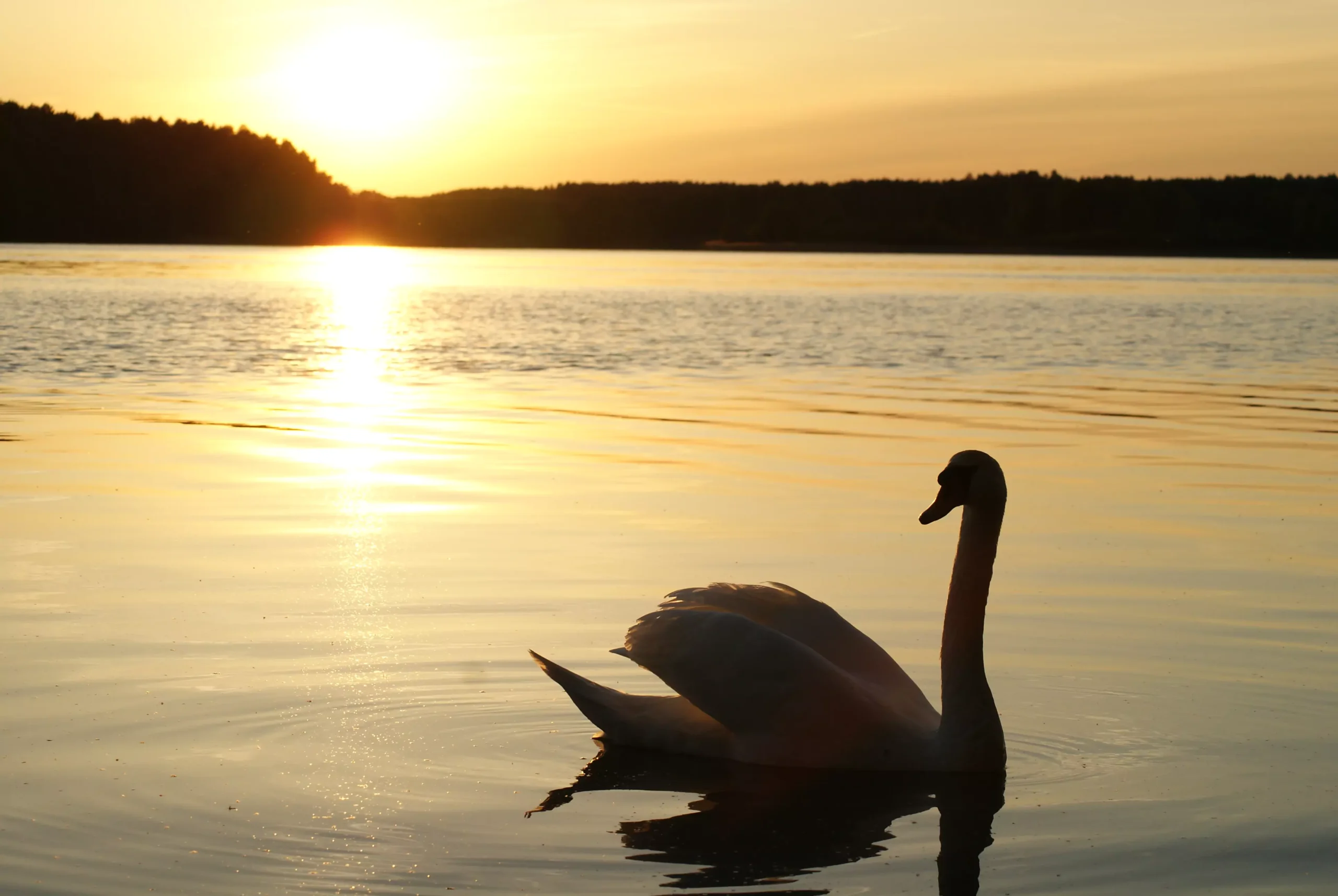
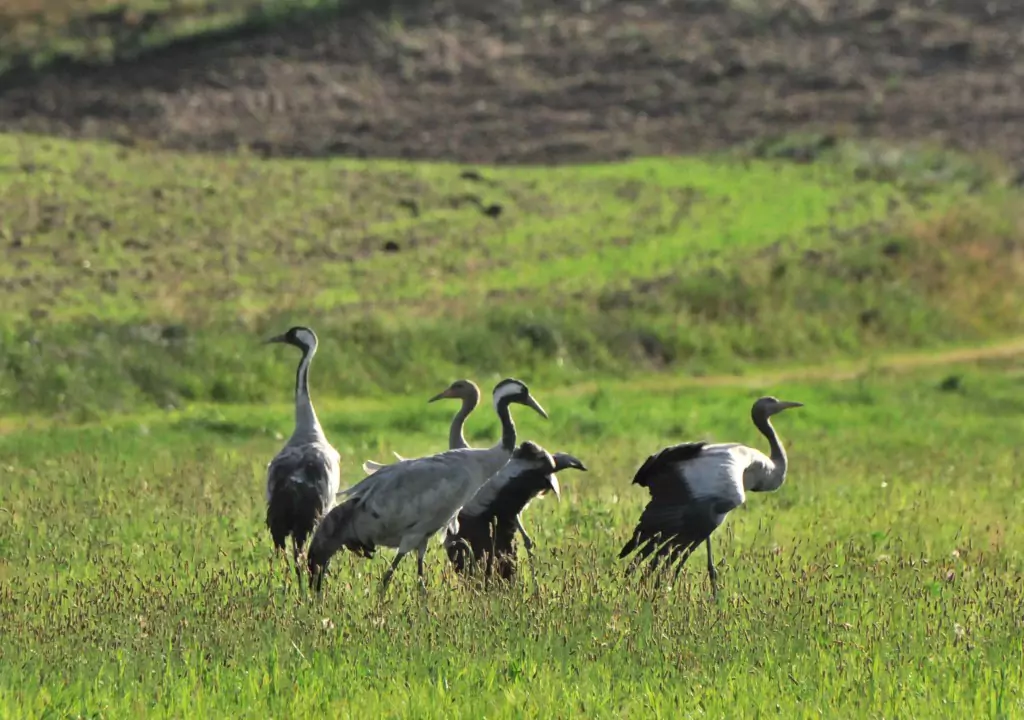
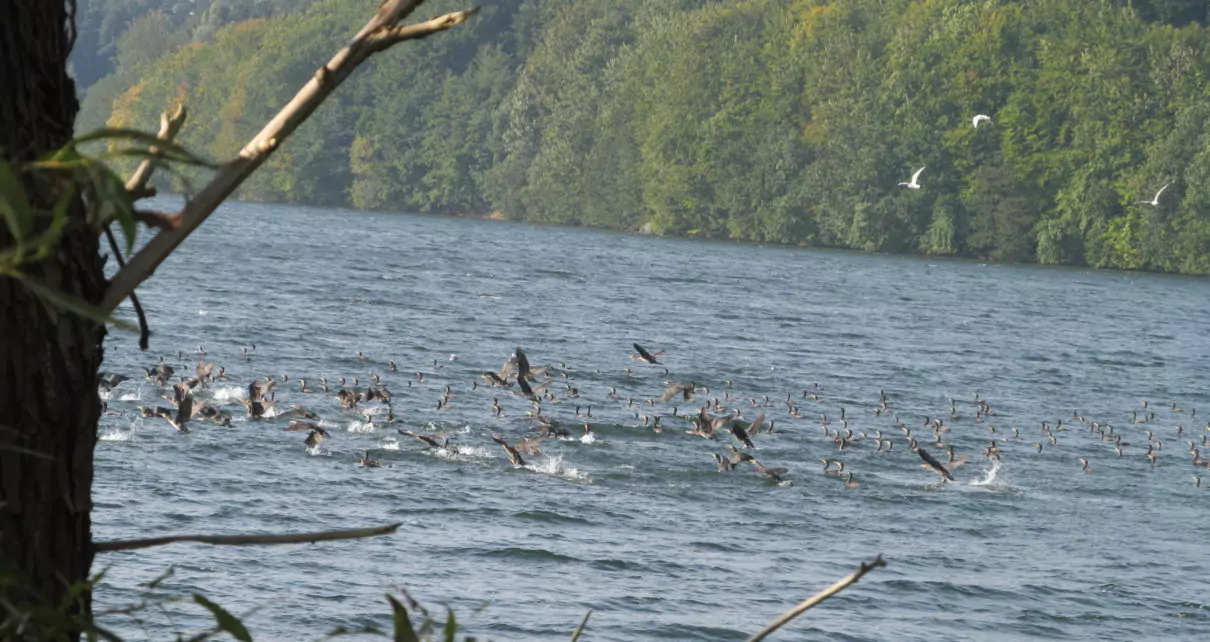
In Lake Wdzydze, in addition to mute swans, you can also see cormorants, herons, cranes, grebes and mergansers. The Kashubian Sea is also characterized by a large beaver population.
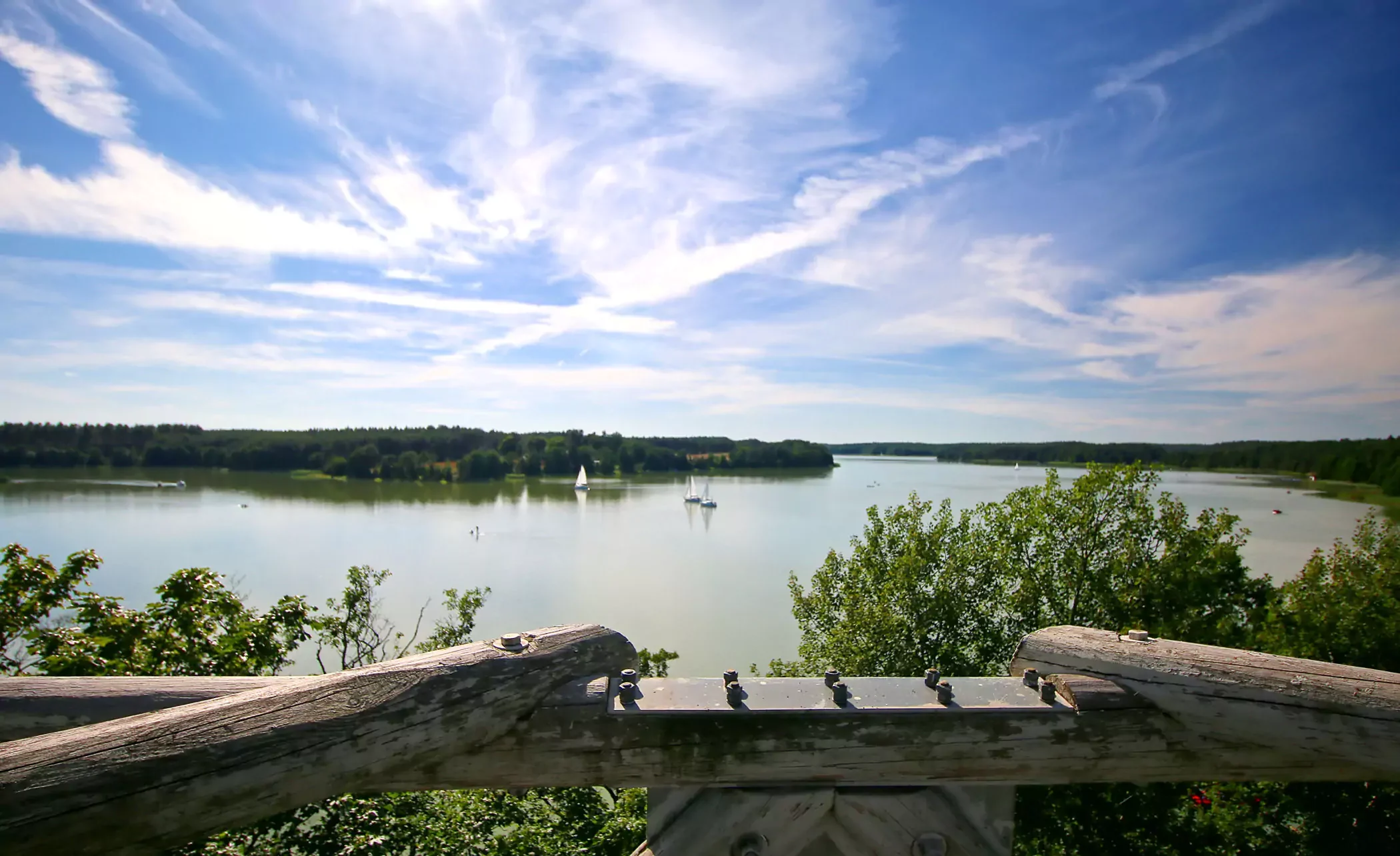
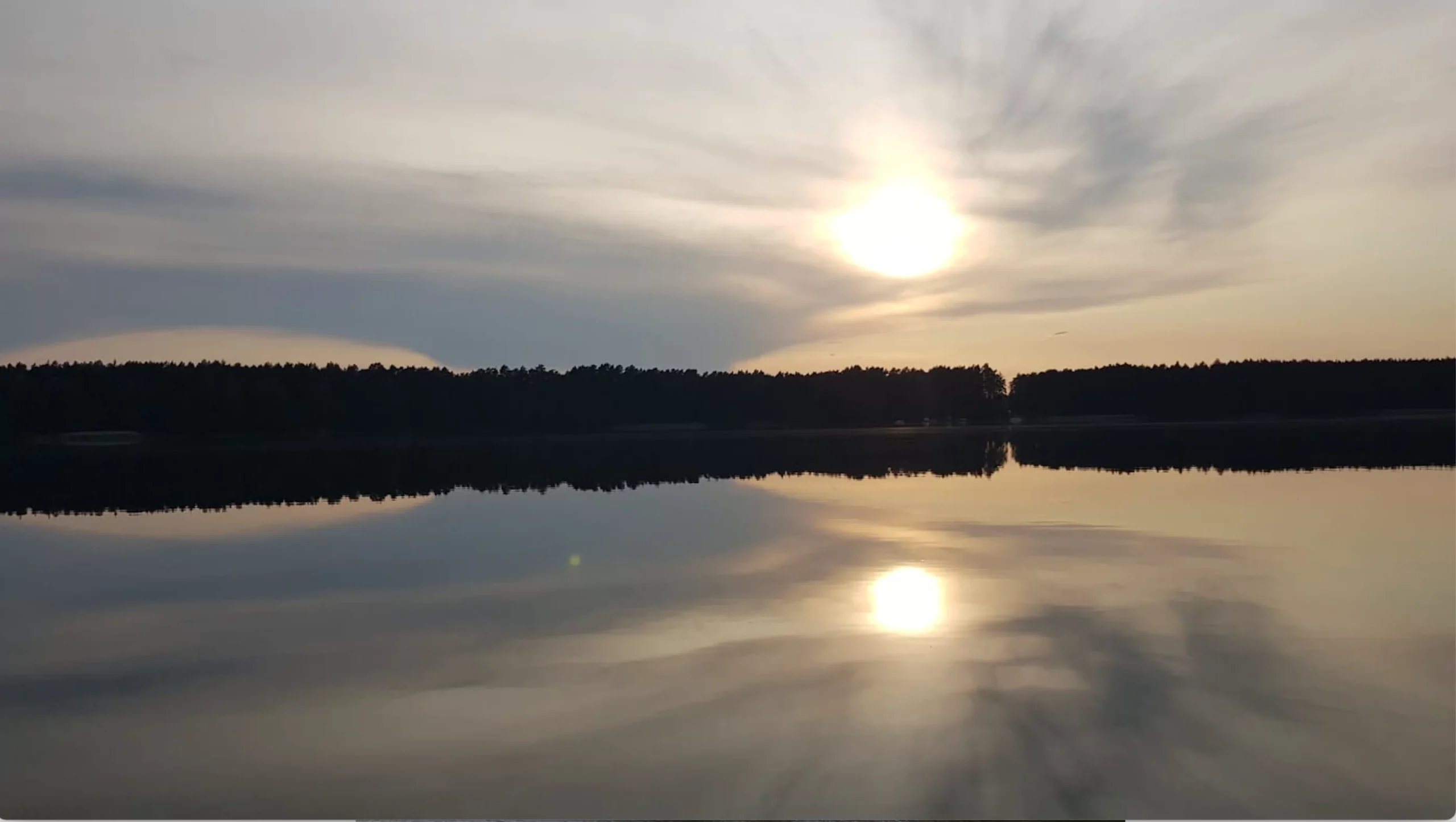
Lake Wdzydze attracts many enthusiasts of fishing, sailing and windsurfing, and when you are there on a beautiful, sunny day, when there is no wind and there is total silence, you feel as if time has stopped.
You can enjoy long walks in the nearby forests, away from industry, city bustle and noise, where you can hear birds singing, the sound of nature and crystal clear air.
The surrounding forests are an ideal place for mushroom picking, and among the birds you can observe eagle owls, long-eared owls, hawks, white-tailed eagles and buzzards.
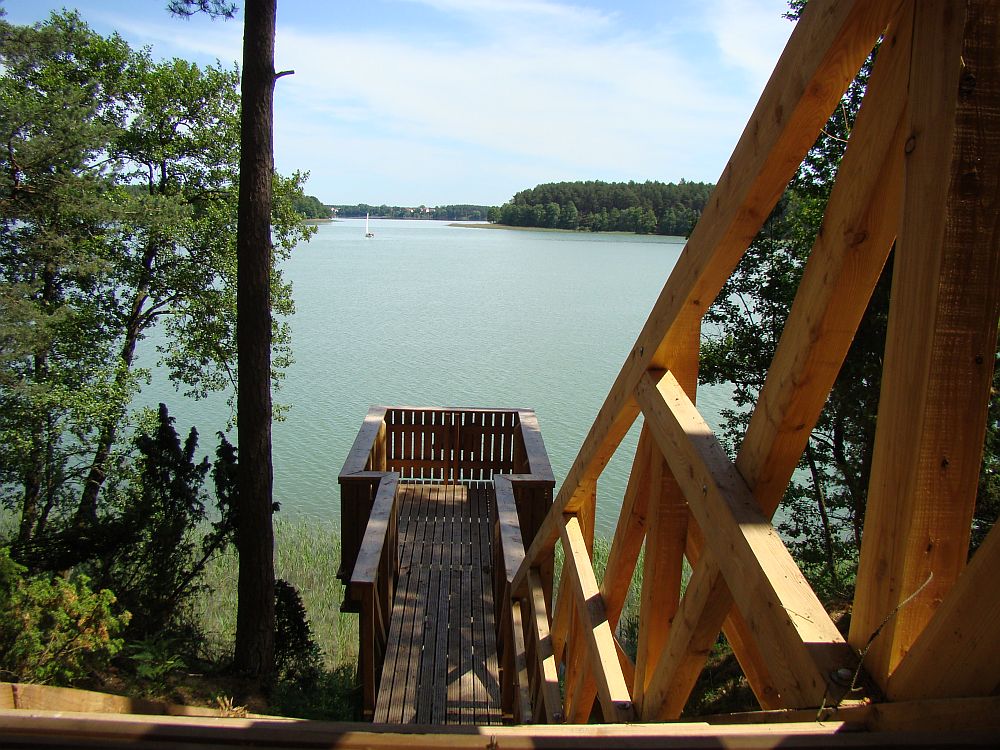
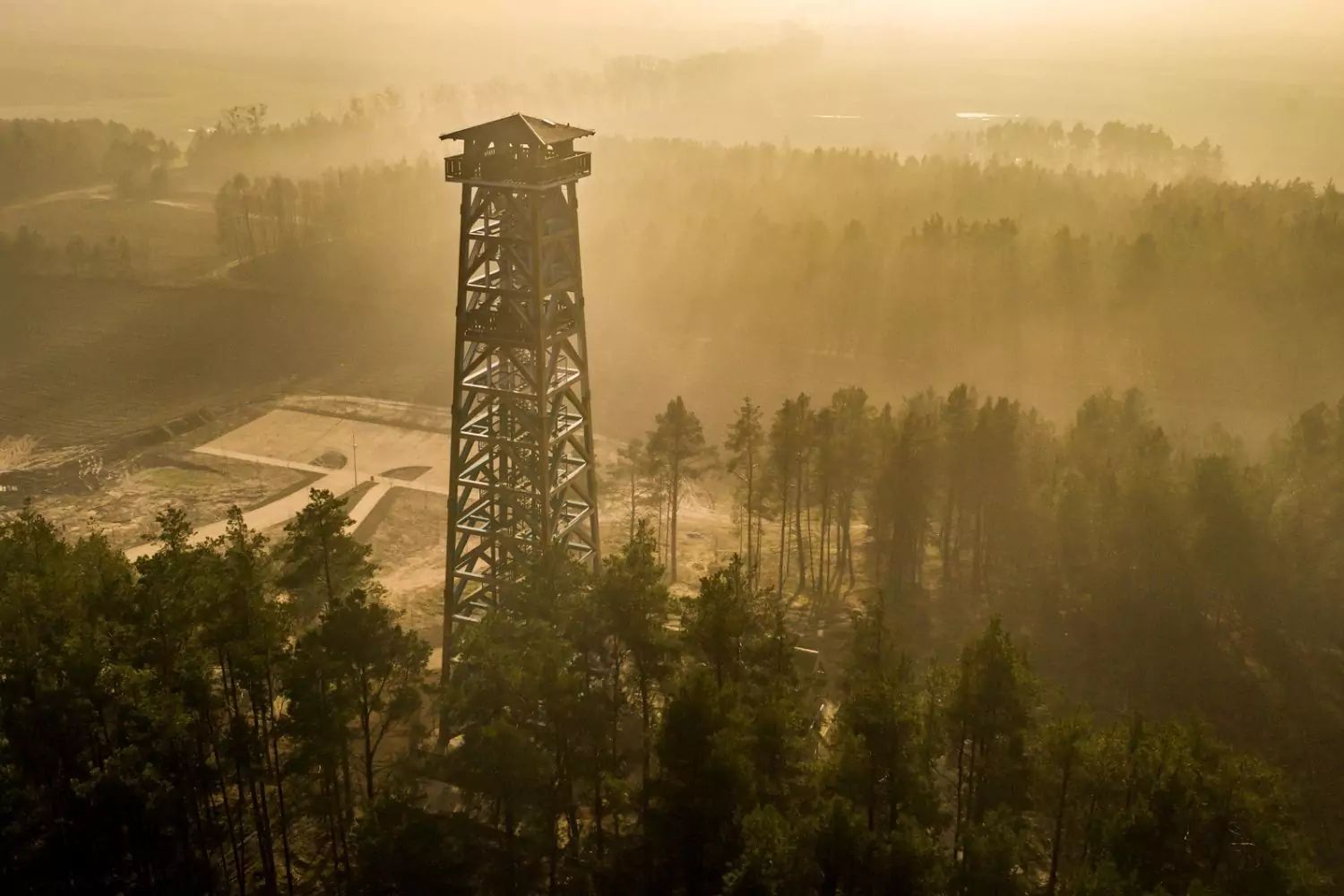
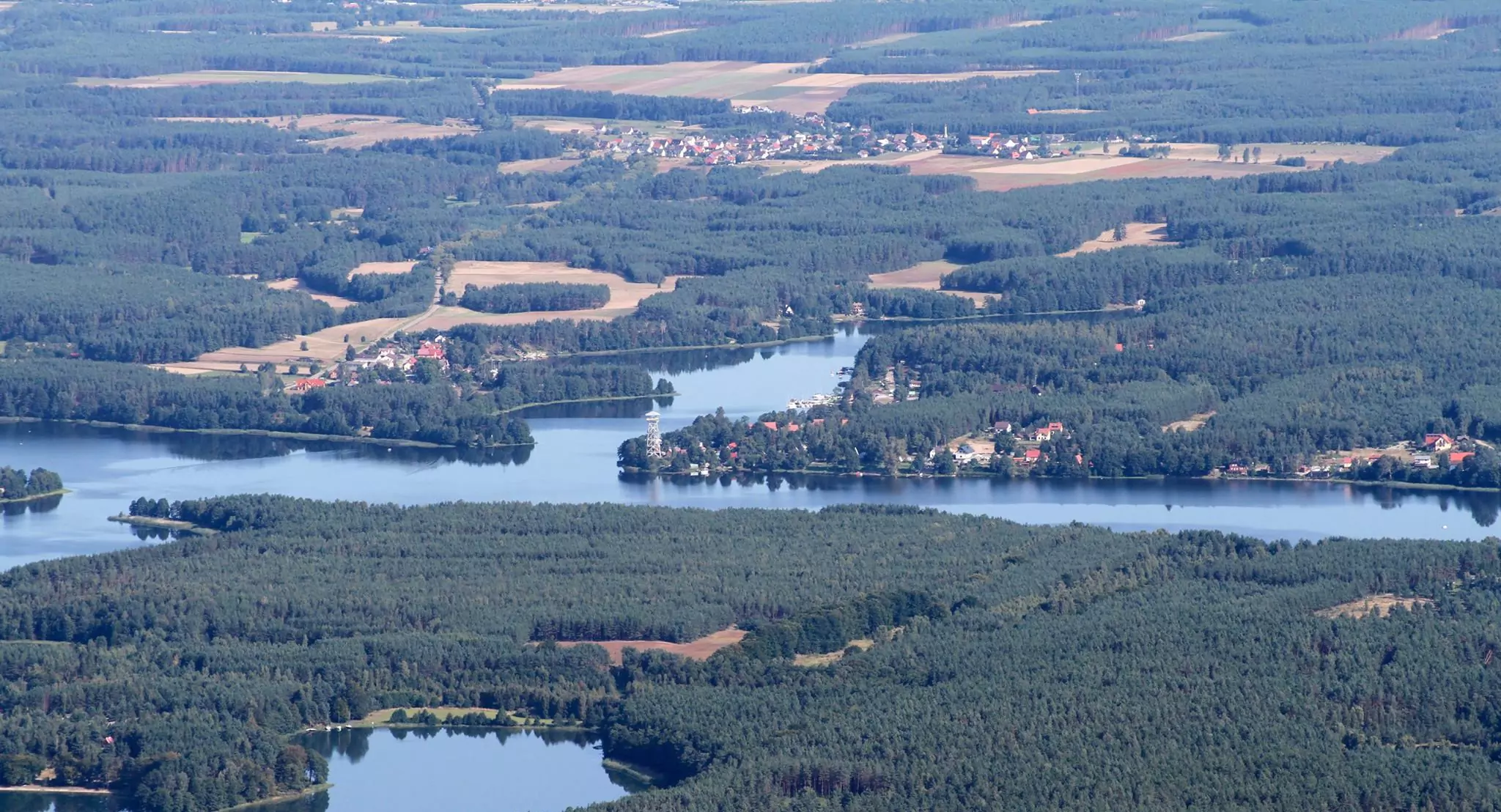
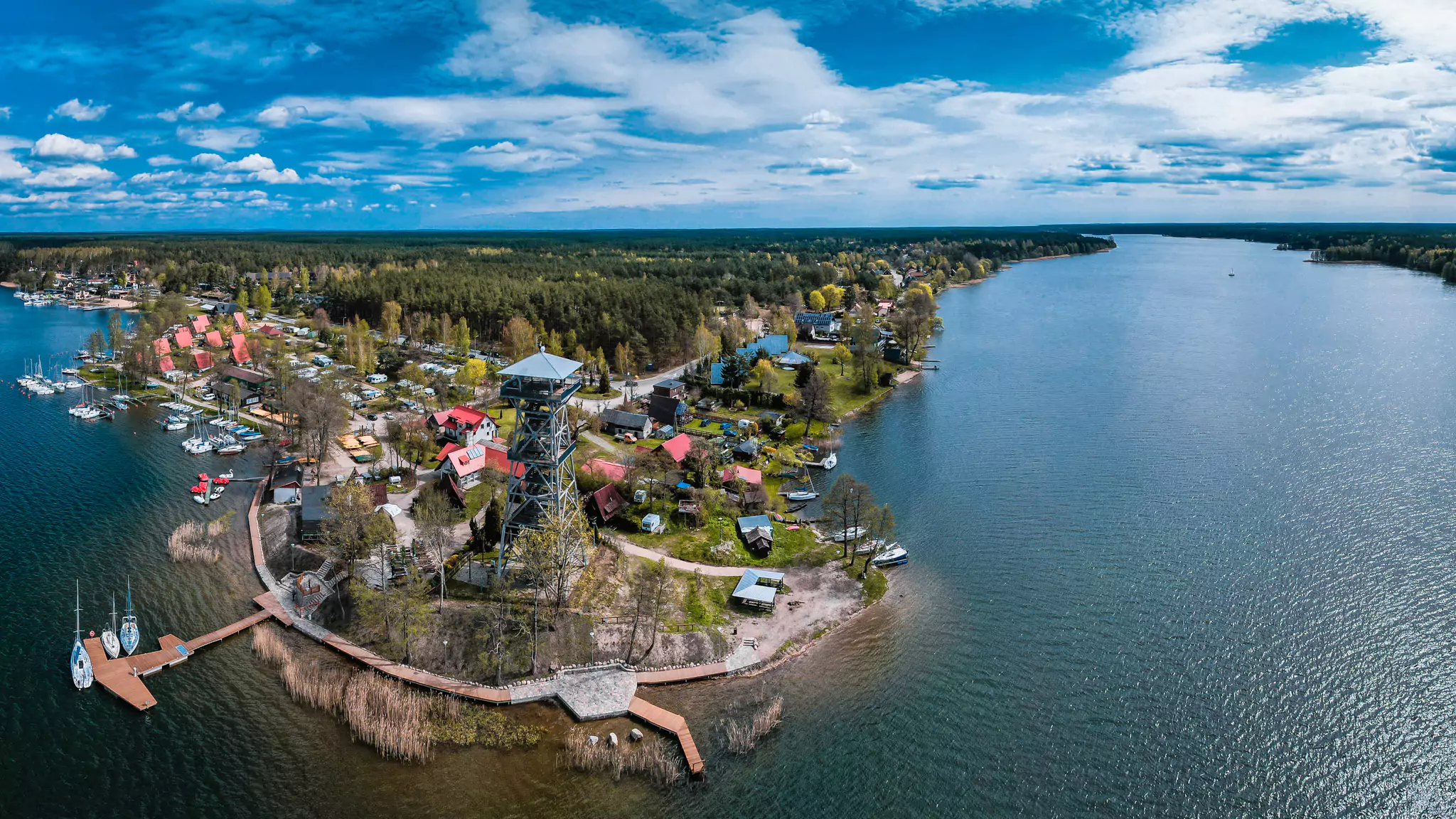
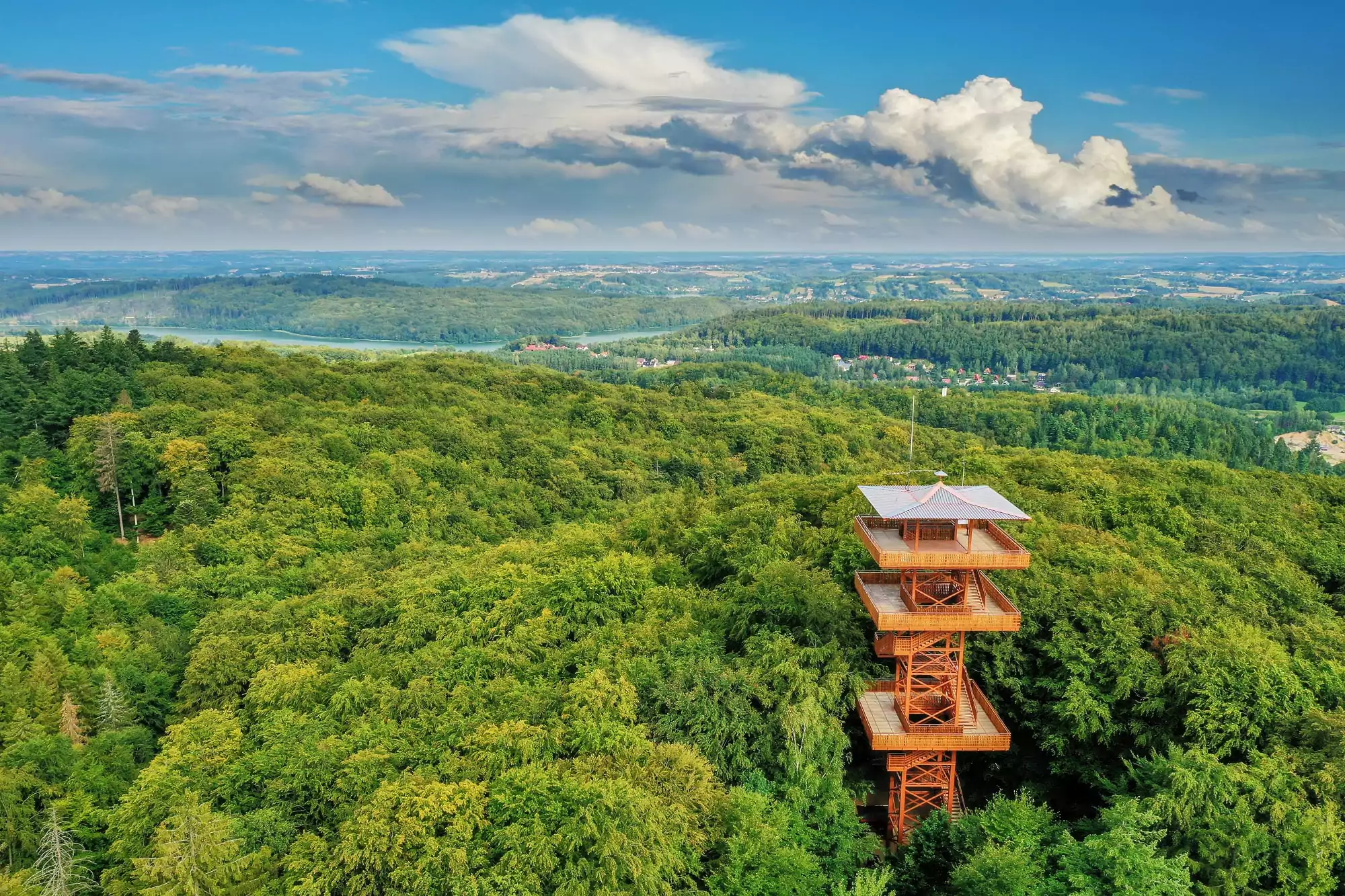
In Przytarnia, 1.2 km away from Dworek Wdzydze, there is an observation tower whose great location provides wonderful views of the surrounding area, including parts of Lake Wdzydze and the islands on it.
Nearby, numerous bicycle, hiking and kayaking trails allow you to admire the most wonderful views of lakes, hills, forests and architecture of the Kashubian land.
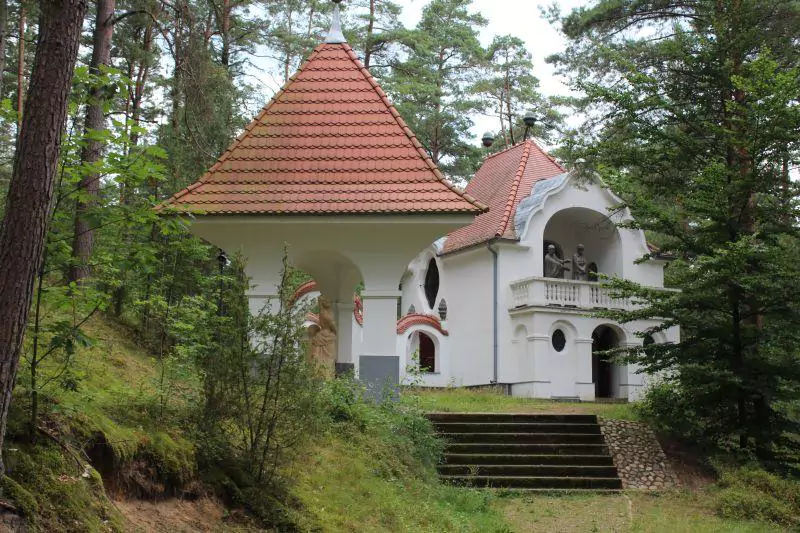
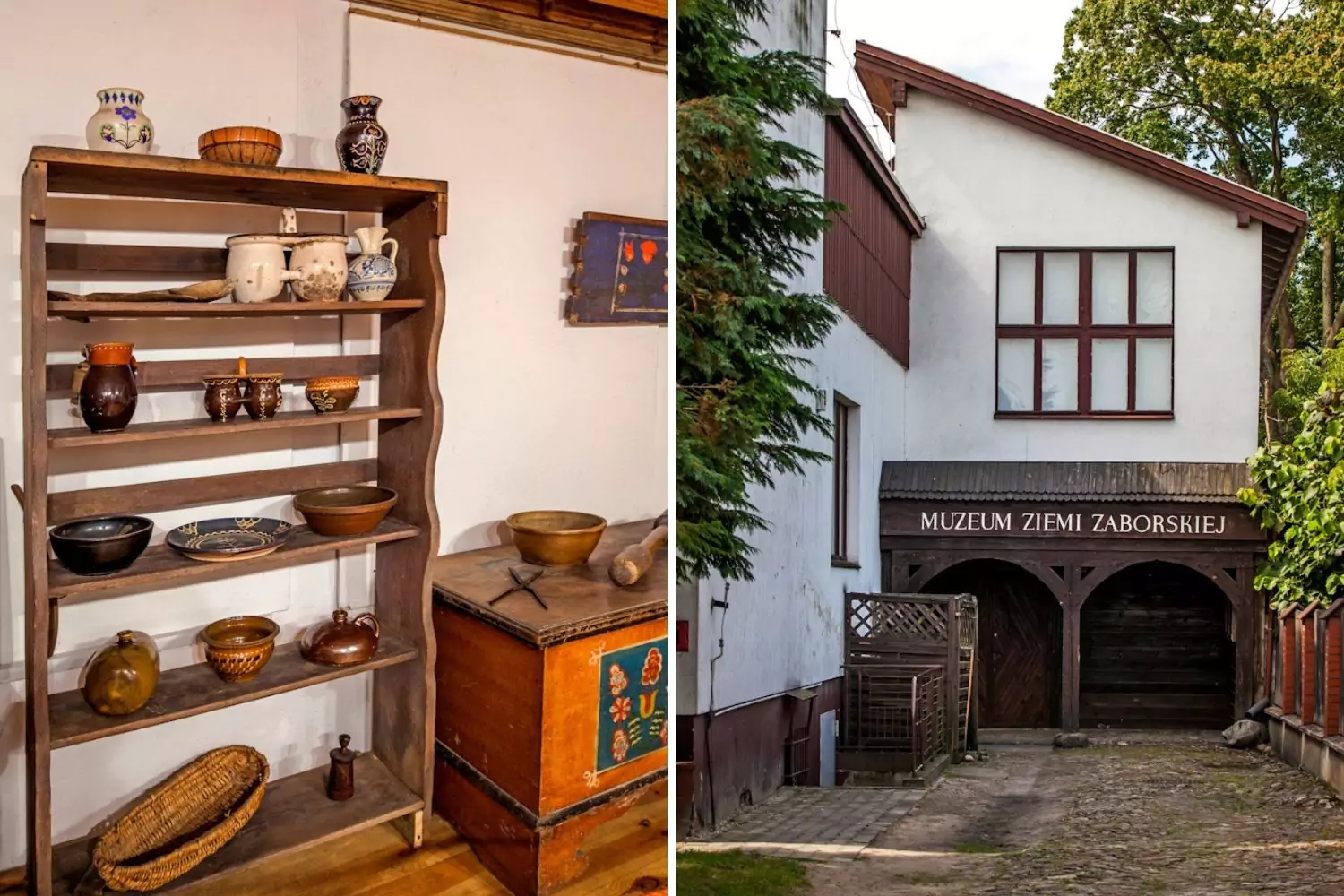
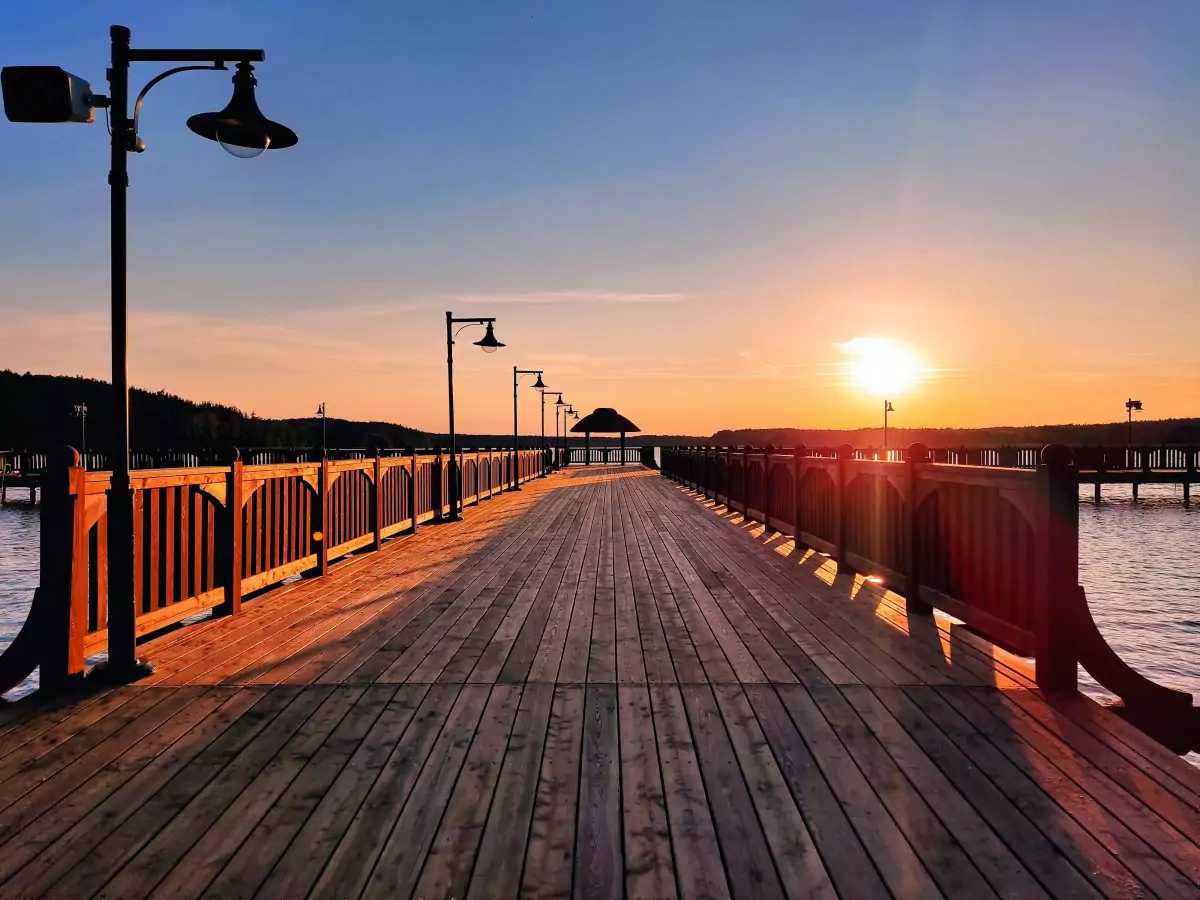
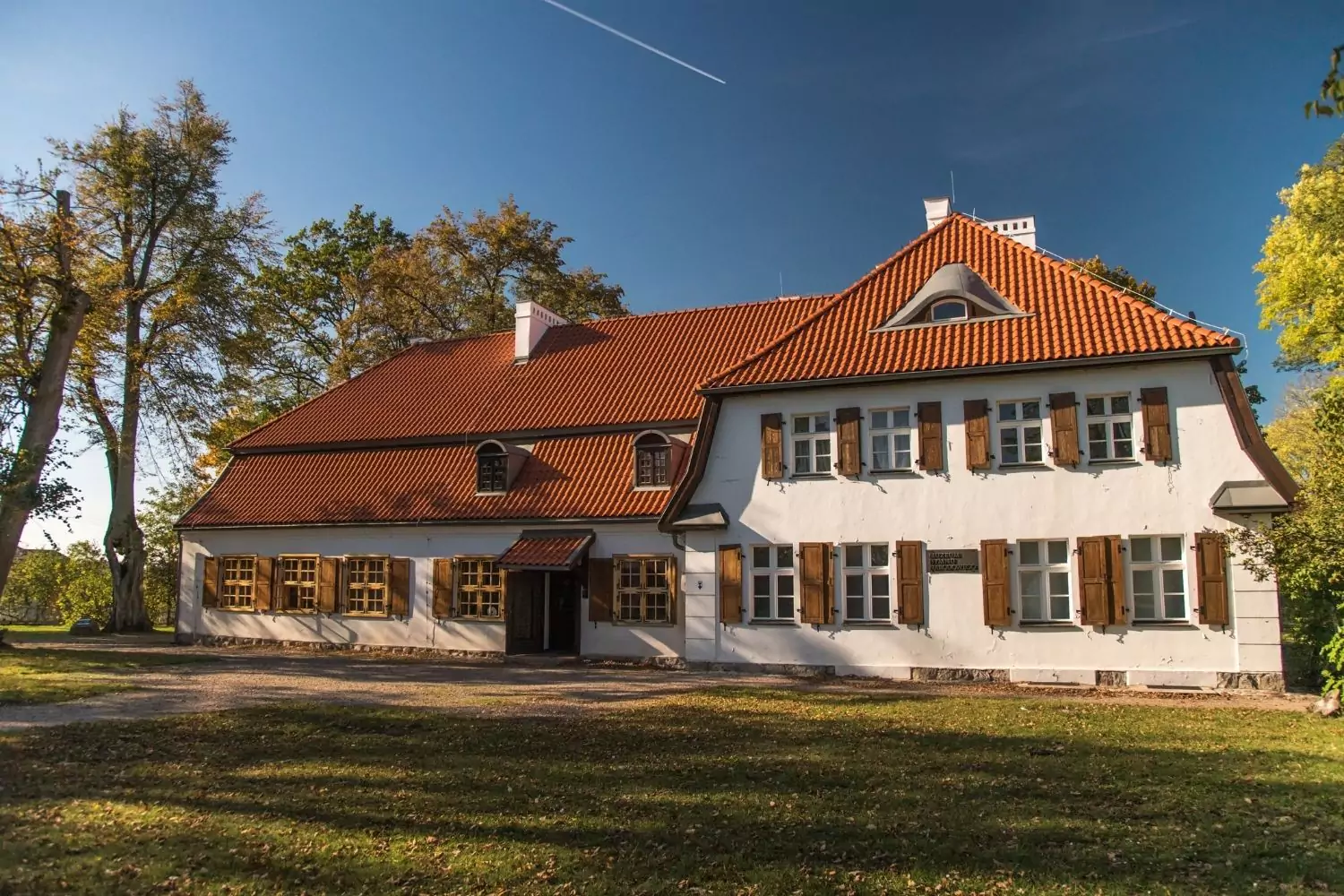
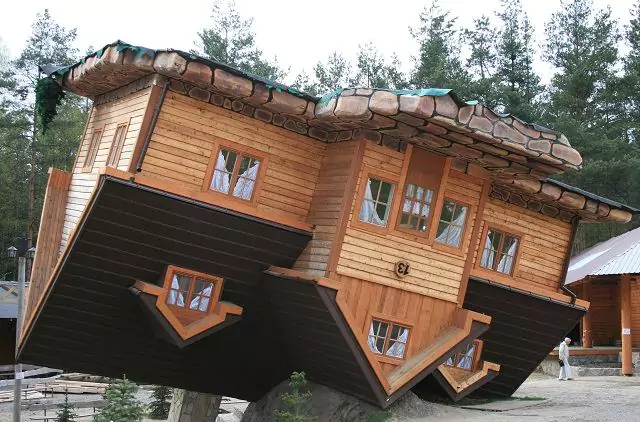
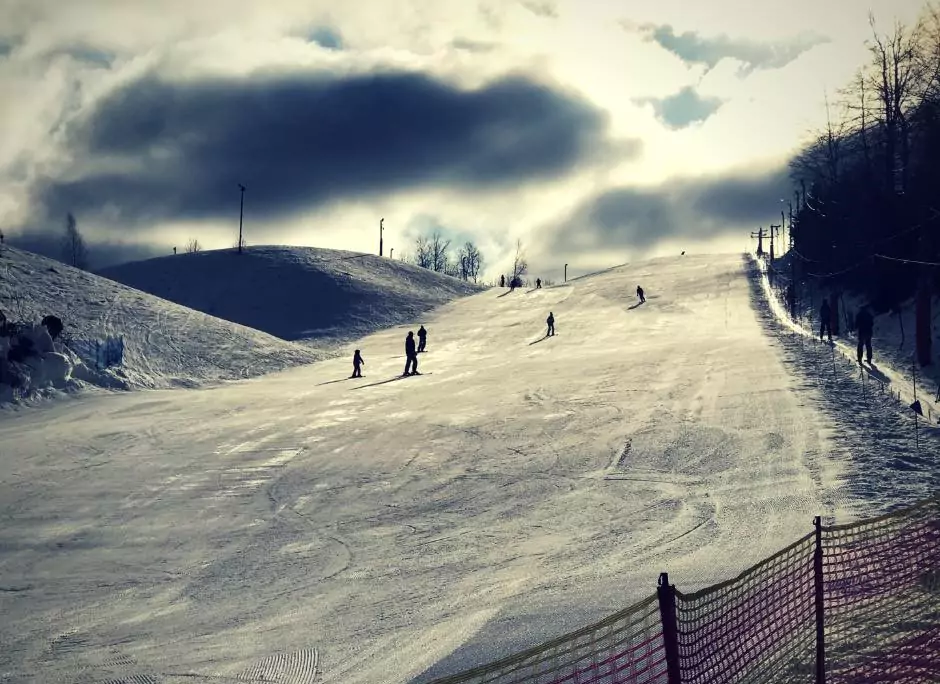
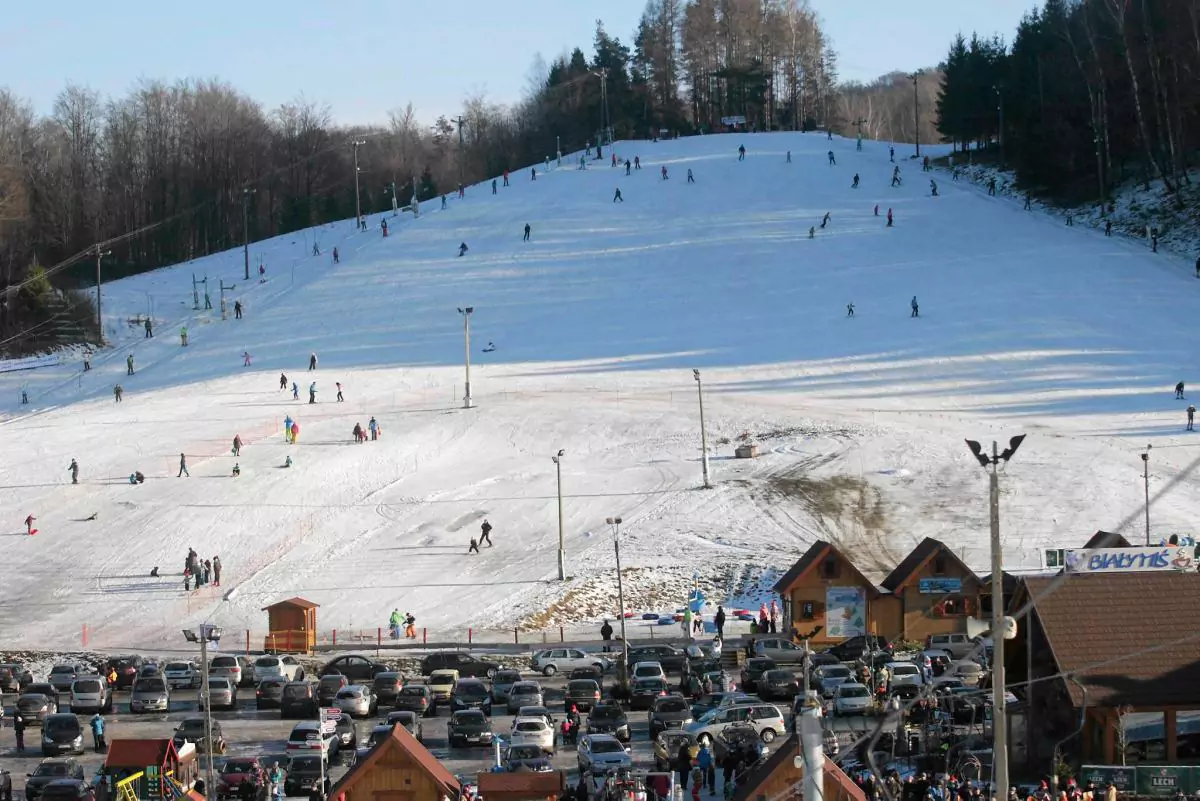
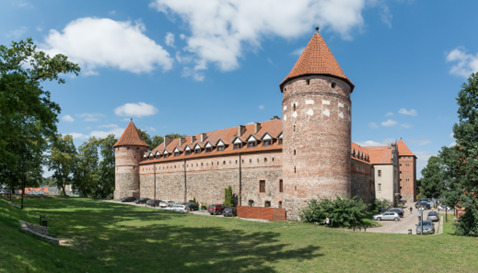
Among the selected tourist attractions located near the Dworek Wdzydze complex, it is worth seeing:

When staying in Kashubia, it is worth tasting the local cuisine, because the regional Kashubian cuisine smells of meadows, fields, lakes and forests. Culinary art is as important a skill here as crafts and folk art, and each dish reflects the spirit of bygone years. Kashubians, as before, use in their dishes ingredients that were and are available in the natural resources of these areas, i.e. fish, forest and agricultural undergrowth and animals bred on the farm.
When visiting the recommended places, it is worth tasting several dishes of local Kashubian cuisine, which have been eaten in this region since ancient times:
- czarna in Kashubian “czôrnina” is a soup-like soup cooked on duck or goose blood, with vegetables, dried fruit, offal and cream. Sugar and vinegar give the blackberry its characteristic sweet and sour taste. In Kashubia, this soup with dumplings is traditionally served on Christmas Day;
- turnip soup, i.e. soup from “yellow wrëki” with a sweet taste. Prepared with the addition of goose or pork meat. Turnip soup is most often prepared in autumn, because it is during this period that turnips appear in the fields;
- Kashubian rye soup – available in most restaurants. This is a traditional Lenten dish, prepared, of course, from home-prepared leaven;
- Brzôdowa soup “brzôdowa” is one of the fasting dishes in Kashubia. Dried fruits: pears, apples, plums and cherries were called “Brzad”, from which the name of the dish comes. The soup is made of fruit, with milk or cream and served with dumplings;
- Żur from Kashubia used to be the basic Lent food of the Kashubian peasant and a traditional dish eaten in Kashubia during Lent. In Kashubia, żurek was fermented in special clay or stoneware pots, called “żurowniki”;
- herring dishes – herring is served in many versions in Kashubia. The most popular is herring in cream with onion and jacket potatoes, i.e. herring with pulkama. In addition, herring is dried and smoked, and marinated in vinegar or oil. Fish dishes in Kashubian cuisine are the basic attribute of this region. Large quantities of fish were salted in barrels for the winter to be fried on fasting days;
- shredded cabbage “szmórowónô kapùsta”, i.e. stewed cabbage for smoking. It is a very nutritious, cheap and quick dish. The sauerkraut was poured with water and cooked, initially uncovered, for about 10 minutes. The cabbage was then covered and cooked until soft. Finely diced smoked bacon or bacon together with onion was fried in a pan. In the next stage, bacon and onion were added to the cabbage along with spices such as salt, pepper, allspice, bay leaf and cooked for a few minutes. The cabbage could be thickened with a roux of flour, pork fat and water;
- Szadolce and Kashubian kulanki made, among others, from Bryza potatoes from our own farm. Sweet cream is added to szadolec, while sour cream is used to coat the balls. Both the cream and milk used to make szadolec and kulanki come from our own farms;
- Kashubian ruchanki – oval pancakes made of rye bread dough with a name that comes from the Kashubian word “ruchane“, i.e. risen and kneaded;
- Kashubian pùrcle, commonly known as donuts;
- plince kaszubskie – the Kashubian equivalent of potato pancakes.
Restaurants and numerous shops are located in the nearby villages: Przytarni, Wielu, Borsko, Wdydze Tucholskie and Karsin, where there is also a Biedronka and Dino store.
Other interesting places and other tourist attractions are available on the website of the Kościerzyna commune and the Wdzydze Landscape Park.



“And in the evening, when the air becomes exceptionally clean and smells of grass bathed in the sun, after a bicycle, hiking or kayaking trip that oxygenates the mind and body, we offer our guests to use the public bonfire”
kayaking
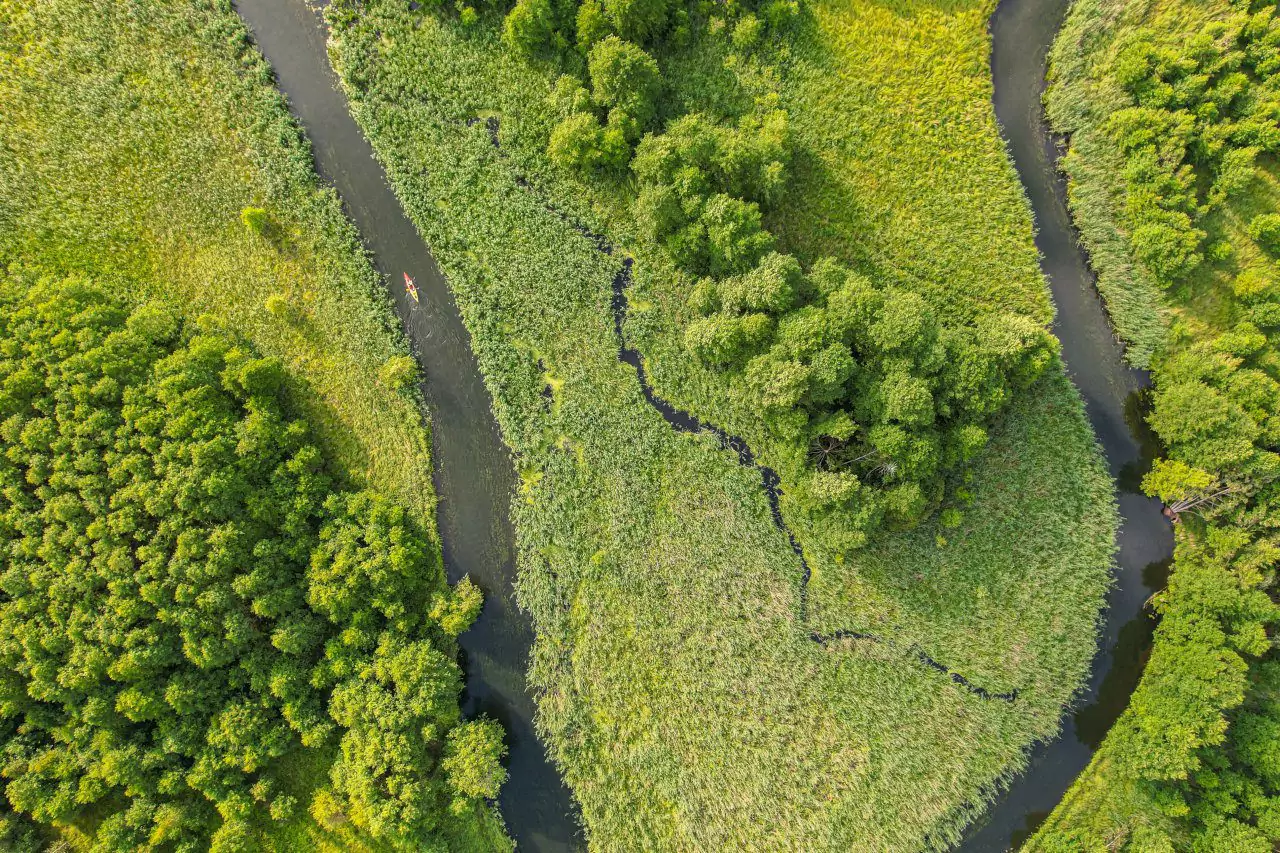
A kayaking trip is an ideal way to get to know the surrounding Wdzydze Landscape Park, its natural peculiarities and beautiful landscape.
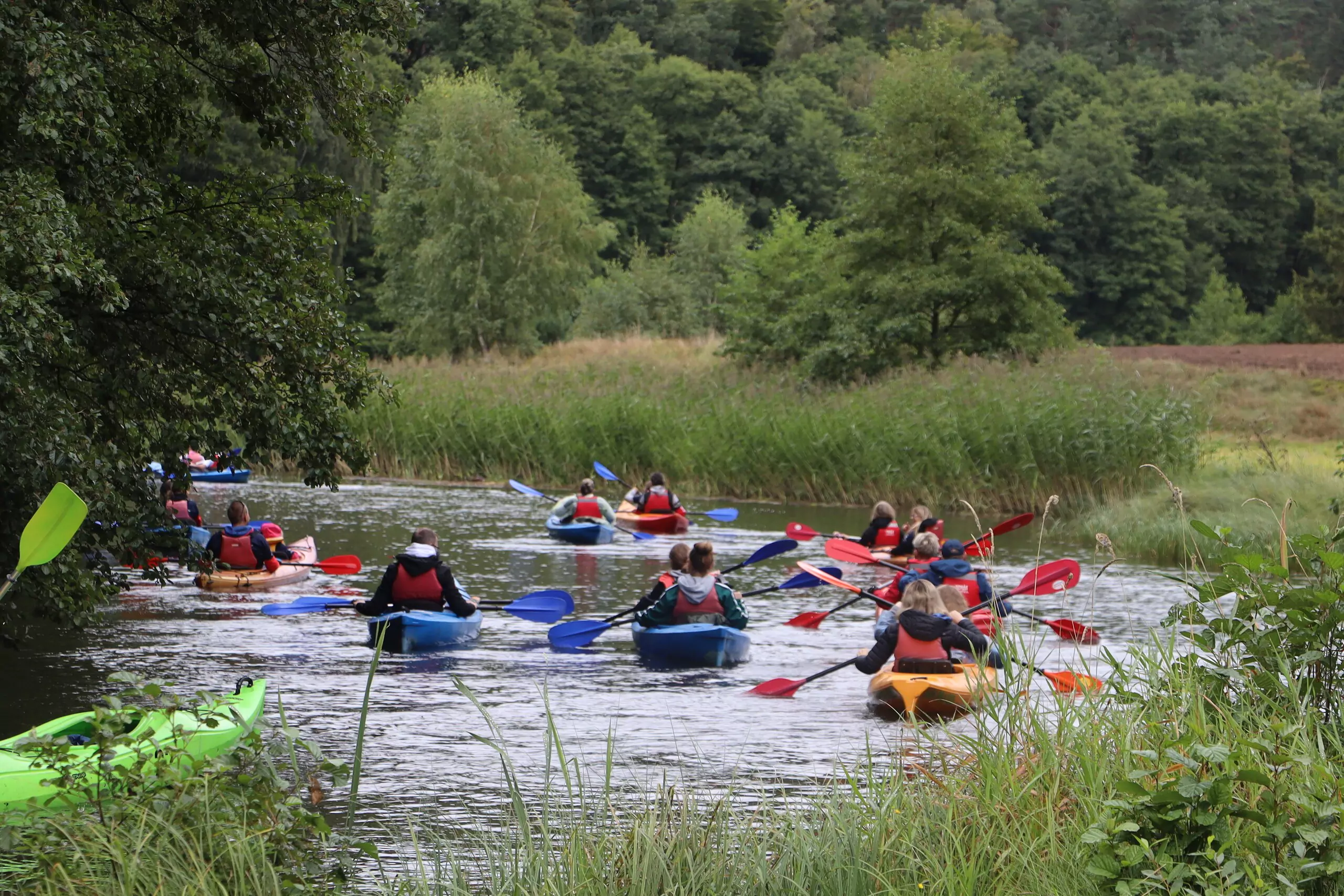
There are water equipment rentals in the area, thanks to which you can organize successful kayaking trips with your family or friends. If we want to go rafting, we should choose a route adapted to our skills, because not every route is suitable for people who are just starting their adventure with paddles and kayaking. The planned route should not be too long so that completing it does not cause too many difficulties, because even on the simplest section you will need to coordinate your paddling activities in order to efficiently overcome the winding trails and obstacles encountered.
Two kayak routes are perfect here, along the Wda and Trzebiocha rivers, which will bring a lot of unforgettable experiences associated with wonderful views and contact with the surrounding nature.
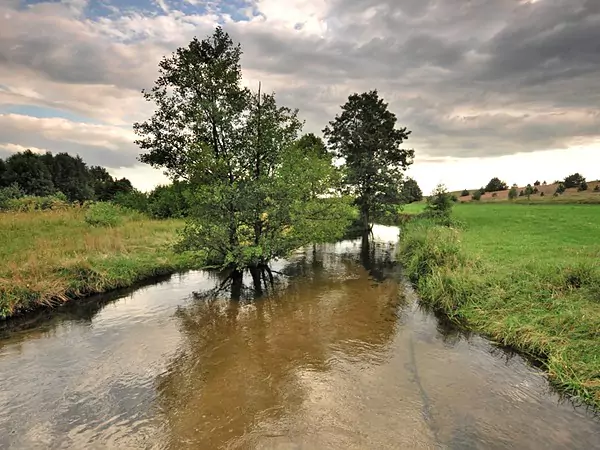
The first of the trails is a picturesque rafting down the Wda River with a total length of 210 km, lasting about 10 days, leading in the Park from Lipusz through the lakes: Schodno, Słupinko, Radolne and Wdzydze to Borsko, connected to the lakes: Osty, Bielawy, Wyrówno, Słupino, Cheb , Jelenie and Gołuń. The Wda River is generally gentle, wide, not deep, with a moderate current, without difficult obstacles to overcome. Still attracting its fans, it is also called Black Water due to its dark color. According to international classification, this trail is considered easy, accessible to beginners, and perfect for a family adventure. On the route of this trail, within the boundaries of the Park, two stopping places have been created, near the villages of Schodno and Loryniec.
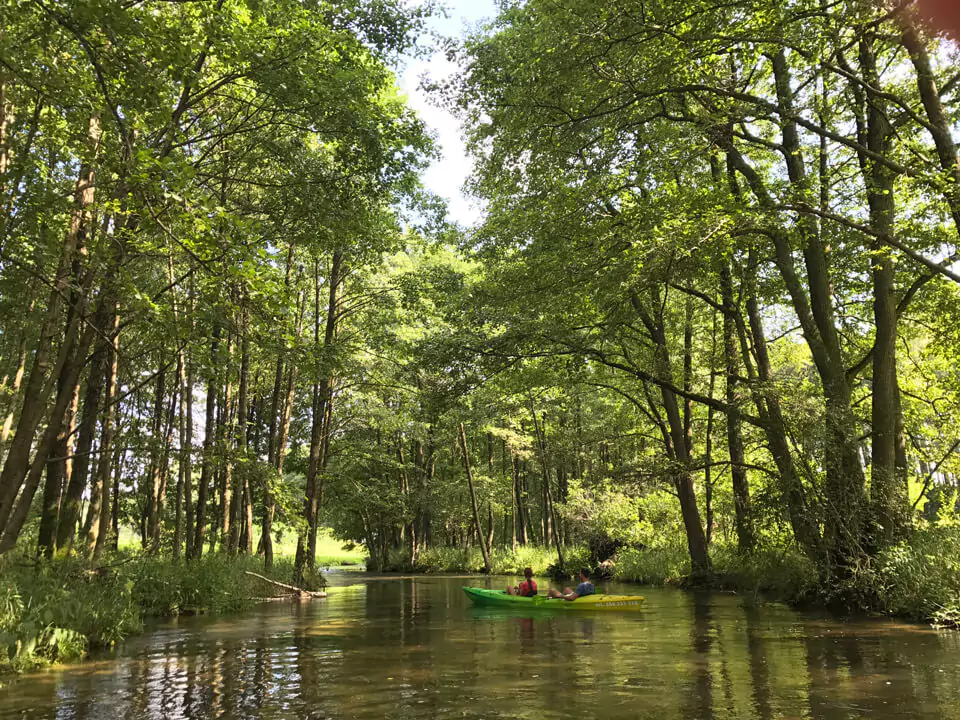
Numerous lakes and tributaries of the Wda create a network of short kayaking routes, of which we offer several variants with an easy level of difficulty:
1. Borsk – Wojtal
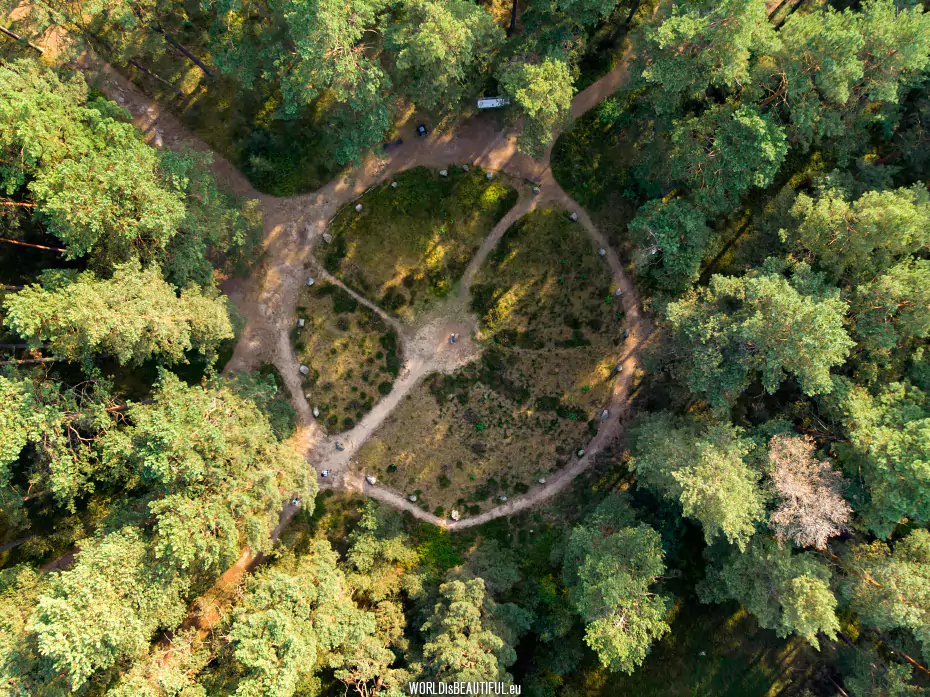
The trip starts in Borsk, on the Wda Canal. Then we reach the lock, where we have to carry our kayaks to the Wda River. Here, for another 500 m, the river current accelerates and the bottom is shallow. This section is full of numerous obstacles. Fallen trees, protruding stones and a branching river add charm and variety to the route. Sailing further, we pass the village of Bąk, then we sail past the Stone Circles Reserve in Odry, where there is a cemetery of the Goth tribe from the 3rd century AD. From this point, the river bed widens and, flowing with the current, we reach the dam in Wojtal, where there are fish ponds. You can buy fresh and smoked trout there. The length of the trip is 14 km and the time to complete the trip is approximately 4.5 hours.
2. Borsk – Miedzno
This route is very similar to the Borsk – Wojtal section, but a few kilometers shorter. In about 3 hours, which is approximately how long it takes to swim the 7 km route, you can take a break from the hustle and bustle of the city and relax among the breathtaking landscapes of the nature surrounding the trail.
3. Wdzydze Kiszewskie – Borsk
We start the route at the PTTK Water Station or at Przystań u Grzegorza. We pass the Kozłowiec Peninsula on the right and, still keeping to the right, we head towards Lake Wdzydze, where we sail on the part called Mała Woda. Lake Wdzydze is sometimes dangerous due to strong side waves, so you should sail along the islands on the leeward side to protect them from the wind. Continuing along Mała Woda, we will pass several islands, Ostrów Wielki, Glonek and Ostrów Mały, which will mark the line leading to Borsko. The length of the 9 km trip can be completed in 4 hours.
4. Lipusz – Wdzydze Kiszewskie
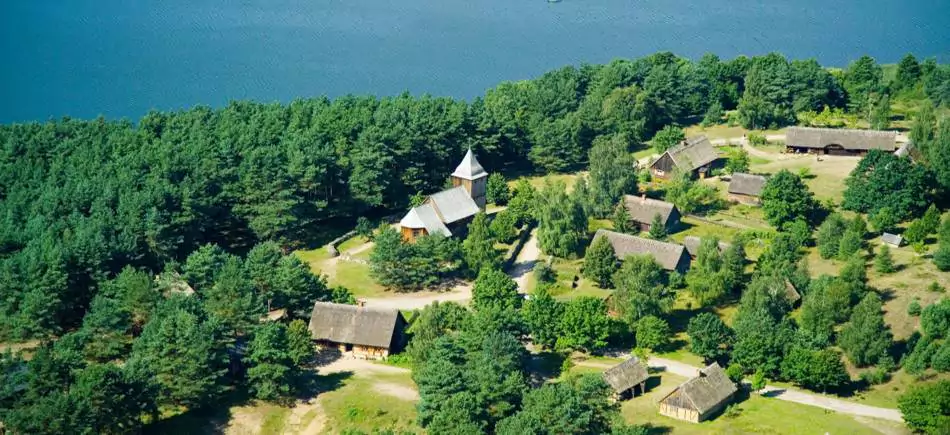
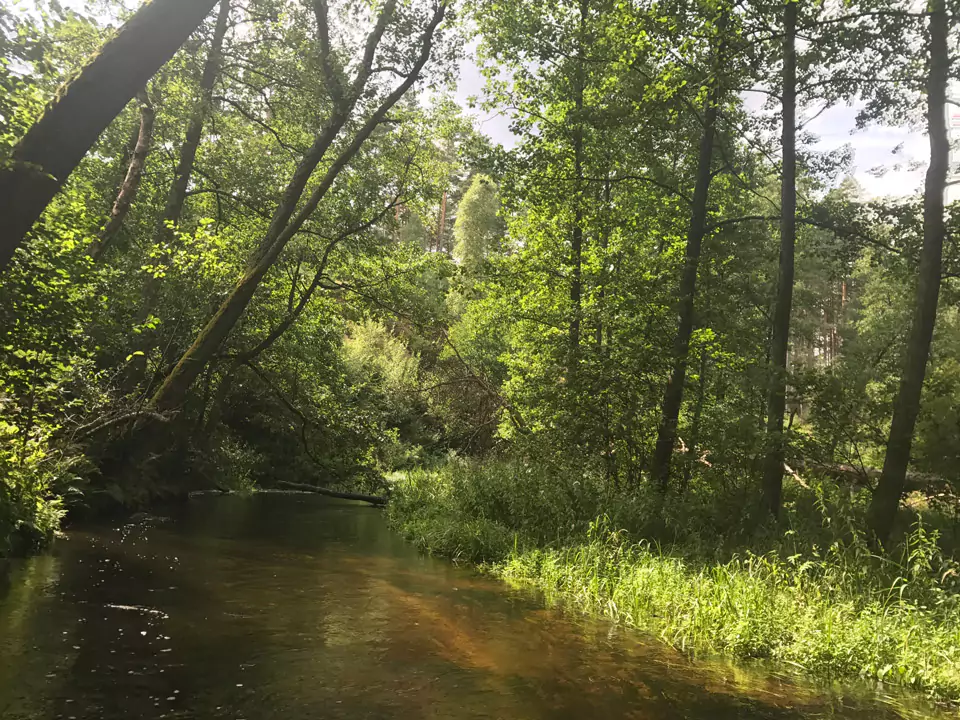
The route starts in the village of Lipusz, where the trip continues along a narrow river bed to Lake Schodno. The route then leads through the village of Loryniec, where, thanks to the stronger current and small obstacles in the river, you can feel a gentle adrenaline rush. After overcoming this slightly more turbulent section, the route will lead through the Wdzydze lake complex to Wdzydze Kiszewskie, where the rafting ends. There you can visit the Kashubian Ethnographic Park. The sailing time along the route from Lipusz to Wdzydze Kiszewskie, which is about 23 km, is about 7 hours at a slower pace, and about 5 hours at a fast pace.
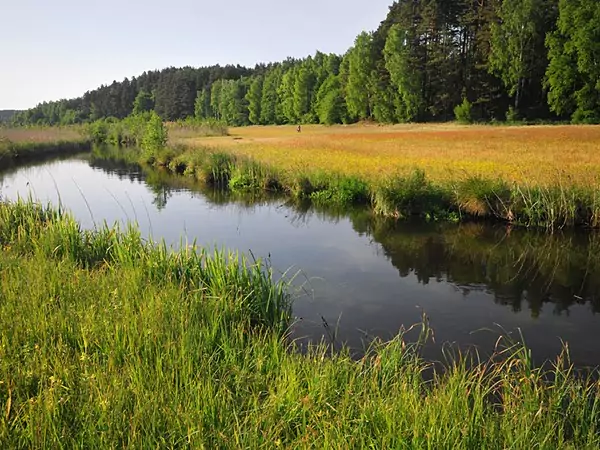
The second Trzebiocha trail is a trail leading to the upper section of the Wda trail. The trail begins at Lake Sudominie in the town of Rybaki. Through charming passages you can flow to two more lakes, Mielnica and Żołnowo, to further enter the river. In the town of Grzybowski Młyn, you have to carry the kayaks through the fish ponds, thanks to the kindness of the fishermen. You can buy fresh and smoked fish there. After the portage, you sail slowly along the breeding ponds and after a few minutes you enter a slightly more rapid section of Trzebiocha. Near the town of Loryniec, Trzebiocha flows into the Wda River, through which you can continue your trip towards the Wdzydze Lakes.
The kayaking trail from Rybaki to Loryniec is approximately 6 km long and takes an average of 3 hours. The Rybaki-Wdzydze Kiszewskie rafting route is 16 km long and the time needed to sail is 6 hours.
You can also start the described route from Lake Osuszyno from the marina at the Szarlota Recreation Complex. In this case, the trip starts by crossing Lake Osuszyno, then flows along the Trzebiocha River to Lake Mielnica, and then flows to the town of Loryniec.
Rafting down the Trzebiota River is rather easy, even for beginner kayakers. However, if you want to set out on the trail, you must take into account the current water level. When it is low, the trail can be difficult in places. It may even require towing the kayaks, so you need to take into account the need to carry the kayaks in some places.
Wda together with Trzebiocha are a planned nature reserve “Dolina Wda i Trzebiocha”, intended to protect the spawning grounds of the only natural population in Poland of an endemic variety of lake trout, commonly called the Wdzyd sea trout.
The protection of sea trout will also involve the protection of entire aquatic and natural ecosystems in the reserve. The valleys of both rivers are inhabited by numerous, rare and protected species of plants and animals.
Bike trails
There are many bicycle trails running through the picturesque areas of the Wdzydze Landscape Park, showing the beauty of Kashubia’s nature. Among them, located near the facility, two are worth recommending: the Przytarnia Loop and a bicycle trip around the Wdzydze Lakes.
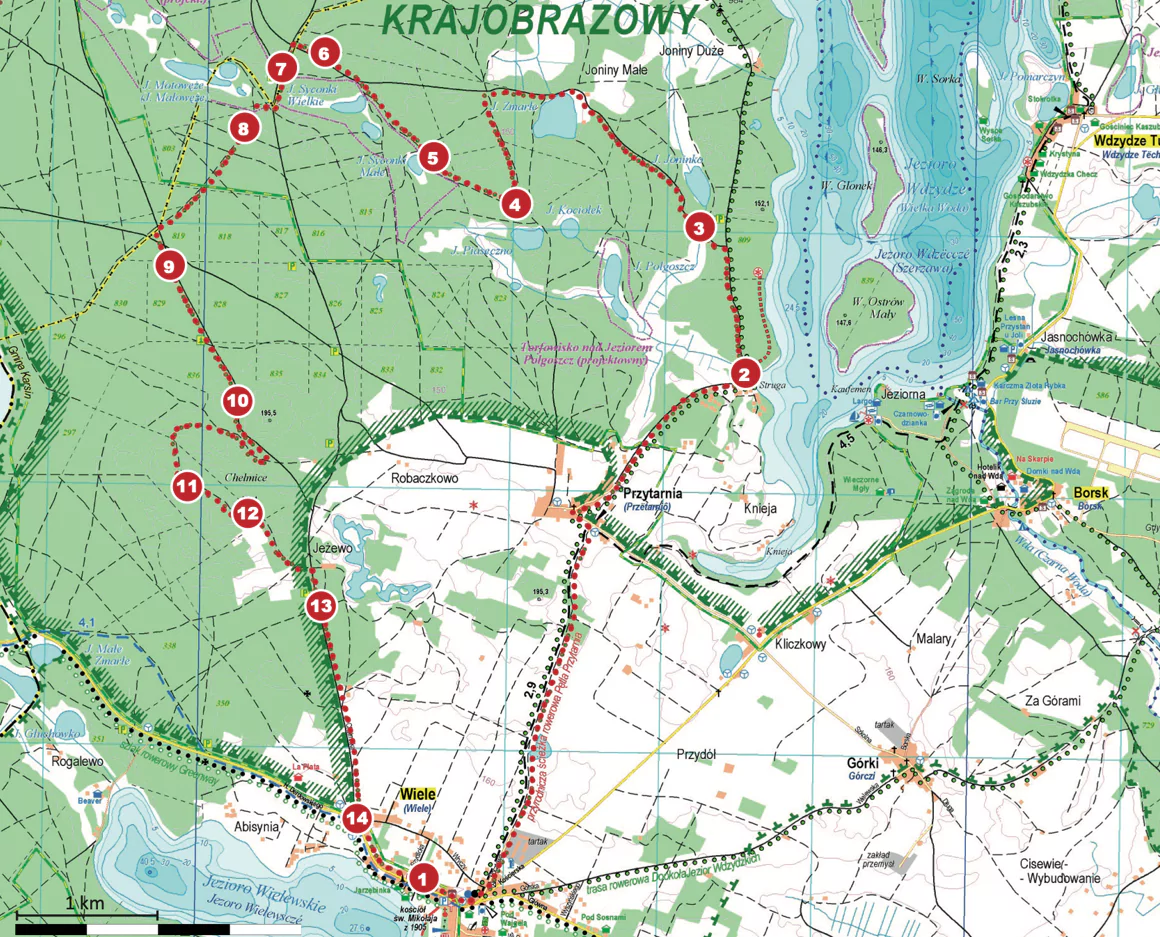
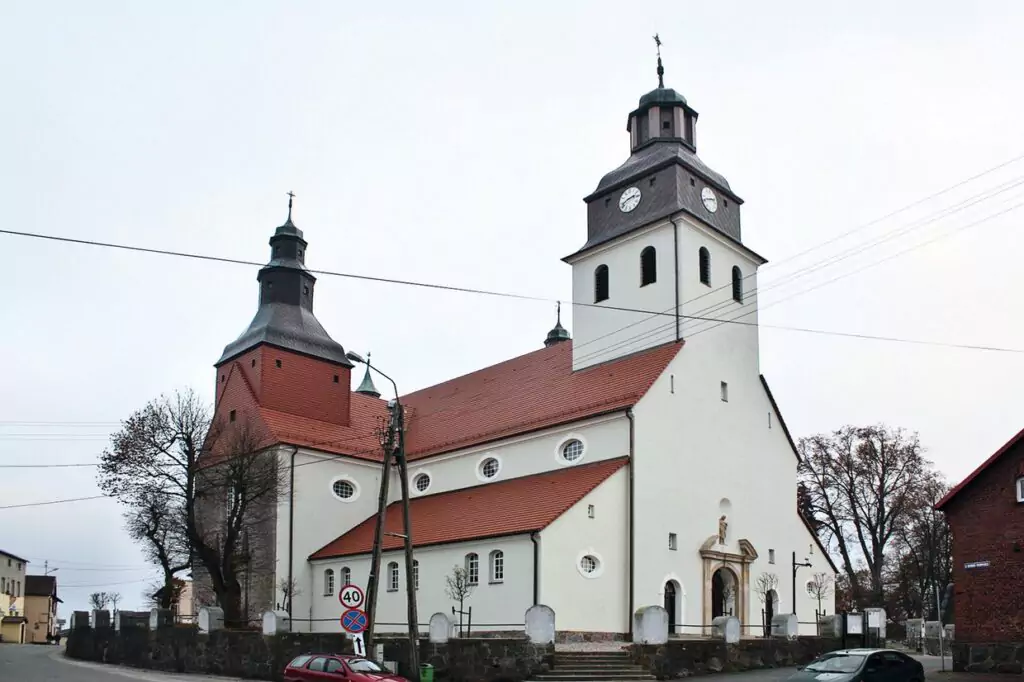
The first route is “Pętla Przytarnia”. A nature bicycle route marked out in the southwestern part of the Wdzydze Landscape Park. The trail marked in red starts at the church of St. Nicholas in Wielu and runs 200m from the Dworek Wdzydze complex. The loop with fourteen educational stops totals 22.5 km. The trail leads through forest paths and dirt roads through dense forests with numerous forest lakes and peat bogs. The duration of the trail including breaks is approximately 2.5 hours. The most difficult section is the ascent to the highest peak in this area – Góra Chełmice (201.4 m above sea level), because a quite steep, winding and sometimes muddy dirt road leads to its top. The first few dozen meters of the climb lead through a dark, deep gorge, and the top of the mountain is covered with a dense beech forest.
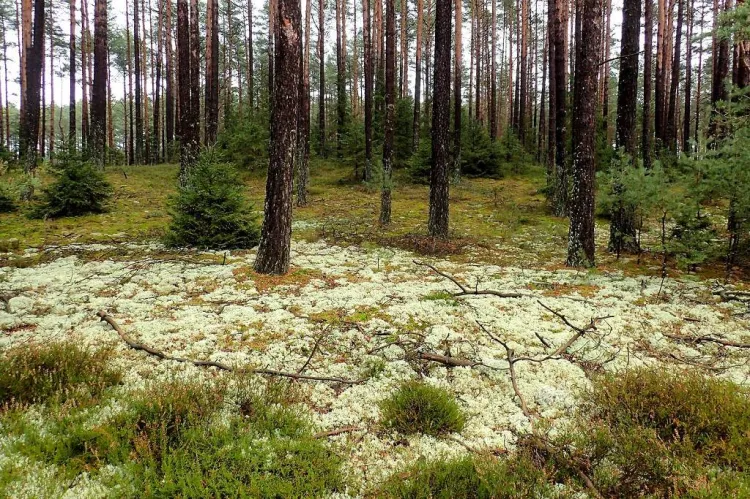
The Przytarnia loop, as a nature bicycle route, is certainly an interesting option for people who value relaxation in the bosom of nature. Information and educational boards placed along the trail present the fauna and flora of the Wdzydze Landscape Park. In addition to valuable information about the life of local plants and animals, along the route you can also find signposts to places worth seeing. Among the numerous places to stop and relax, it is worth spending some time on the charming forest melting and dystrophic lakes as well as the surrounding peat bogs, including: Motosnakes, Small Syconks, Greater Syconks and Black Syconks. In densely overgrown forests, the sight of the characteristic forest undergrowth covered with gray lichens will surely catch your eye – this is the so-called bór chrobotkowy.
From the trail, it is worth turning towards the viewing platform, which offers a beautiful view of Lake Wdzydze.
It is worth doing the Przytarnia loop during a bicycle trip around the Wdzydze Lakes.
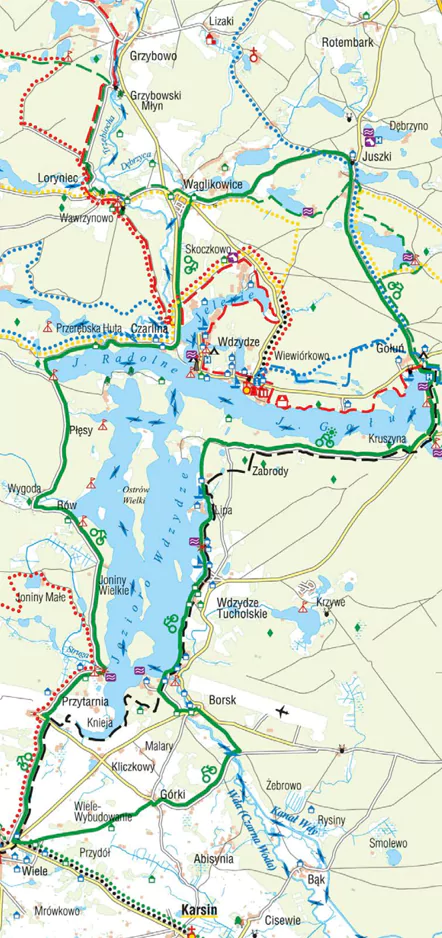
This scenic bicycle route “around the Wdzydze Lakes” was designed to show as many values as possible of the Wdzydze Landscape Park. It leads along the shores of vast lakes, through forest paths and through endless forests. He visits picturesque villages and allows you to learn about the nature of the Kashubian land. The entire route is marked with painted green signs on trees and signposts, and its length is 48.5 km. The route begins in Wąglikowice, next to a large board with a map. Then we set off south, to Czarlina. From there we pass through the no longer existing Przerębska Huta farm and then through Rów, Wygoda, Joniny Małe, the village of Przytarnia, Wiele, Górki, Abysynia Górska, Borsk, Wdzydze Tucholskie, Lipa, Zabrody, Gołuń and Juszki, from where we return to Wąglikowice. In this way, a loop is created surrounding the entire Wdzydze Lakes complex. When planning this trip, it is worth knowing the route of this quite long and demanding trail. Most of the route leads along dirt, forest and field roads, and in a few places the descents require special caution.
This route connects to the remaining trails of the Wdzydze Landscape Park and PTTK hiking routes, so you can encounter signposts pointing to tourist attractions located outside the basic trail.